by Gabrielle Zevin
Dear Reader,
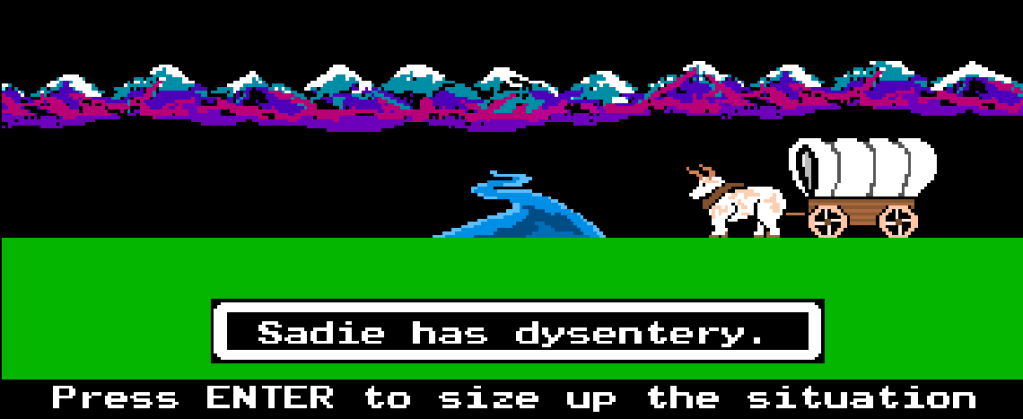
When I finished reading Tomorrow, And Tomorrow, And Tomorrow, I put the book down, picked my laptop up, and started playing The Oregon Trail. I’m not a gamer. I haven’t played Oregon Trail since sixth grade typing, it was the only game on the computers that we could play once we finished our assignments. While I toggled through the game, I thought about Sadie and Sam, and while I hadn’t yet decided just how I felt about them, I knew that they’d inspired me to play a game.
Tomorrow & follows two childhood frenemies over the course of three decades, from a pediatric hospital in LA to Harvard and MIT and back to LA where they house their video game company. Sam and Sadie have a tumultuous relationship, largely due to Sam’s reserved and sometimes manipulative nature and Sadie’s unwillingness to compromise, that is held together by their shared passion for video games and their best friend and producer, Marx.
This novel is Zevin’s tenth published work. She is a Harvard graduate who lives in LA, which makes clear why Sam and Sadie’s walks across the Harvard Green and Venice Beach feel so immersed in reality.
Zevin chronicles the complexities of their difficult friendship, plagued by jealousy, insecurity, disability and death. While I am never turned off by an unlikable main character, Sam was rather infuriating and Sadie had her moments. If you only enjoy books where you root for the main characters the whole time, Tomorrow & may not be for you (unless you treat Marx as the central character, although he is clearly Hector, not Achilles, Banquo, not Macbeth).
The literary and art historical references that Zevin wove throughout the novel were excellent. You might think the continual references to The Illiad and Shakespeare are out of place in a book about game designers in the 90s, but Marx’s background makes it work. Even the title draws itself from one of the soliloquies of the Scottish play.
Tomorrow, and tomorrow, and tomorrow,
Creeps in this petty pace from day to day,
To the last syllable of recorded time;
And all our yesterdays have lighted fools
The way to dusty death. Out, out, brief candle!
Life’s but a walking shadow, a poor player,
That struts and frets his hour upon the stage,
And then is heard no more. It is a tale
Told by an idiot, full of sound and fury,
Signifying nothing.
I particularly loved Master of the Revels, Sadie’s sweet ode to Marx, I’ll have to see if there’s a game in our reality that focuses on the Elizabethan theater scene. Meanwhile, the art historian in me ate up every morsel of reference to Hokusai and the Strawberry Thief.
I settled on a rating of 4 out of 5 stars for Tomorrow, And Tomorrow, And Tomorrow. I was prepared to lower it to a 3.5 if Sam and Sadie wound up together in a romantic sense in the end, although I trusted that Zevin knew her characters enough not to let that happen. I was totally immersed in the world of Unfair Games, each of the games that Sadie and Sam designed were so beautifully played out for me I felt like I was playing. And she used the style of the game so cleverly in the Pioneers section, but particularly in NPC.
There were some things that didn’t totally work for me, times when I felt like we went too deep into side characters or ideas that felt unfinished. I kept waiting for the Anna Lee connection to come around and, while it was beautiful, it never really landed. I also felt we spent a bit too much time with Simon and Ant, although I suppose their story was the catalyst for the tragedy that unfolded.
Overwhelmingly, though, I enjoyed the writing style. Zevin was brilliant in the use of various callbacks. Each one, the Tamer of Horses, The Magic Eye, the names of the games, the references to Macbeth, felt so natural, the kind of in-jokes you have with people you’ve loved, hated and worked alongside for years. There was an excellent sentimentality to the voice and the shift in viewpoints – the characters and their game characters, interviews and reviews – made for a dynamic read. There were several times where I was quickly flipping pages and didn’t want to put the book down. I loved learning about the world of video game design, something I know nothing about, couched in literature and art, which I know at least something about.
And I loved Marx.
If you, like me, loved this book and left the reading experience with a desire to play games, I’d recommend starting on Gabrielle Zevin’s website where you can play Emily Blasters, the first game Sadie Green ever designed. Or, you can join me in a journey on the Oregon Trail.
It will come as no surprise that I did not make it to Oregon when I tried to play for the first time in 14 years, but it was still fun to trade for oxen and caulk my wagon to ford the river. Maybe this book will inspire me to starting playing video games and I’ll start blogging about them, too, but for now it was meditative to try and get Marx and Sam and Sadie and Zoe and Dov from Independence, Missouri across the Oregon Trail.
And Sadie did, in the end, die of dysentery.
 Dear Reader Reviews